
5. The Boy and the Heron (Hiyao Miyazaki)
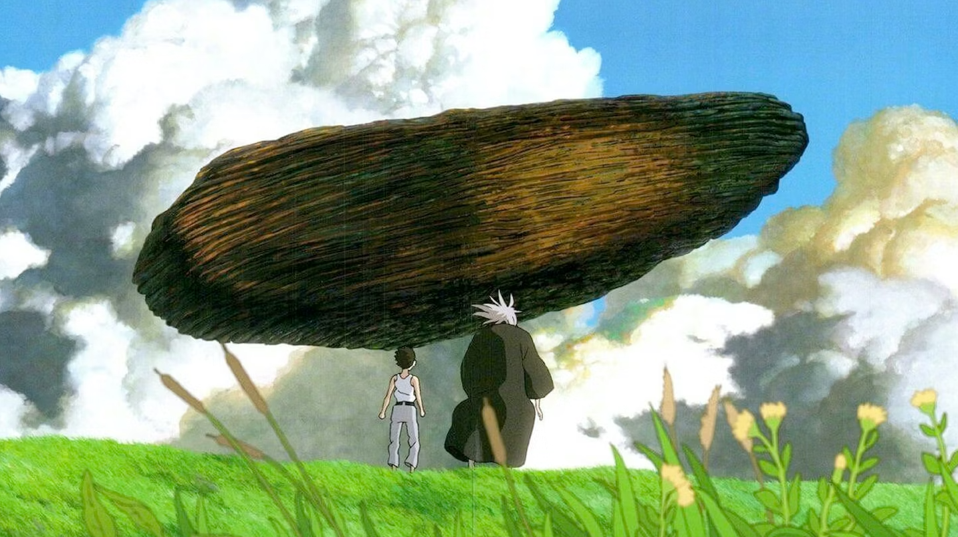
The twelfth and most likely final film from legendary anime director Hiyao Miyazaki, The Boy and the Heron is yet another transfixing, fantastical journey from an animator who remains unrivaled in his ability to conjure sensations of child-like awe. Each of Miyazaki’s films, even the weaker ones, give you the feeling of being pulled into a vivid dream and this one is no exception.
After losing his mother in a hospital fire, a young boy named Mahito is forced to move to the countryside with his emotionally distant father, who quickly gets remarried to the sister of his deceased wife. Unsurprisingly, Mahito isn’t quick to warm up to his new mother and struggles to fit in at school. After a fight in which he’s seriously injured, strange things begin to happen, including frequent visits from a talking grey heron. Eventually, Mahito decides to follow the heron into a mysterious tower that seems to be the gateway to another world, pulling the boy into a hallucinatory odyssey that will teach him many things about himself and the mother he lost.
As viewers have come to expect from Miyazaki, the quality of the animation is top-tier and the sheer imaginativeness of the world-building is staggering. It’s probably one of the most beautiful-looking animated films that I’ve seen and features a mature, complex story to go with it. In fact, the film is layered with personal meaning to the point that I know I’ll need a second viewing to fully absorb it.
Released in Japan under the much-cooler and more appropriate title How Do You Live?, the 83 year-old filmmaker uses this dark fable of a movie to reflect on his own legacy and challenge his audience with that very question. In a world filled with darkness and despair, is it possible to build a reality that’s pure and untouched by evil? According to Miyazaki, the best way to start is to embrace the people you have in your life, learning to love and accept them for who they really are.
4. Anatomy of a Fall (Justine Triet)

The Palme D’Or winner at last year’s Cannes Film Festival, Anatomy of a Fall is a ruthless and riveting French courtroom drama that puts a fractured relationship on trial after the husband (Samuel Theis) suspiciously falls to his death. When his body is discovered by the couple’s blind son Daniel (Milo Machado Graner), it triggers an investigation that quickly casts suspicion on Sandra (a terrific Sandra Huller), with the lengthy trial leaving no stone unturned in the couple’s tumultuous past.
A successful writer who’s known for crafting fictional narratives that draw heavily from her real-life experience, Sandra is almost immediately vilified by the public and the prosecution, as details in her story fail to add up and surprising new evidence is discovered. From the beginning of the film, it’s easy to jump to the conclusion that she’s guilty – but is the case really that simple? Writer/director Justine Triet, along with her co-writer and real-life husband Arthur Hararri, dole out information slowly and methodically, casting doubt on what really happened and never offering a definitive answer.
Some viewers may find the ambiguity frustrating, but for me, it’s what makes the film a memorable and thought-provoking experience. Instead of a typical whodunit murder mystery, the script is more interested in how quickly people form assumptions without knowing the full context behind events, and how the process of being tried can irreparably shatter people’s lives regardless of what the verdict ends up being. When it’s impossible to ever know the truth of something, how do we decide what the truth is for ourselves? After giving us all the known details of the case, Anatomy of a Fall poses this difficult question to the viewer and asks them to form their own opinion.
3. Dream Scenario (Kristoffer Borgli)
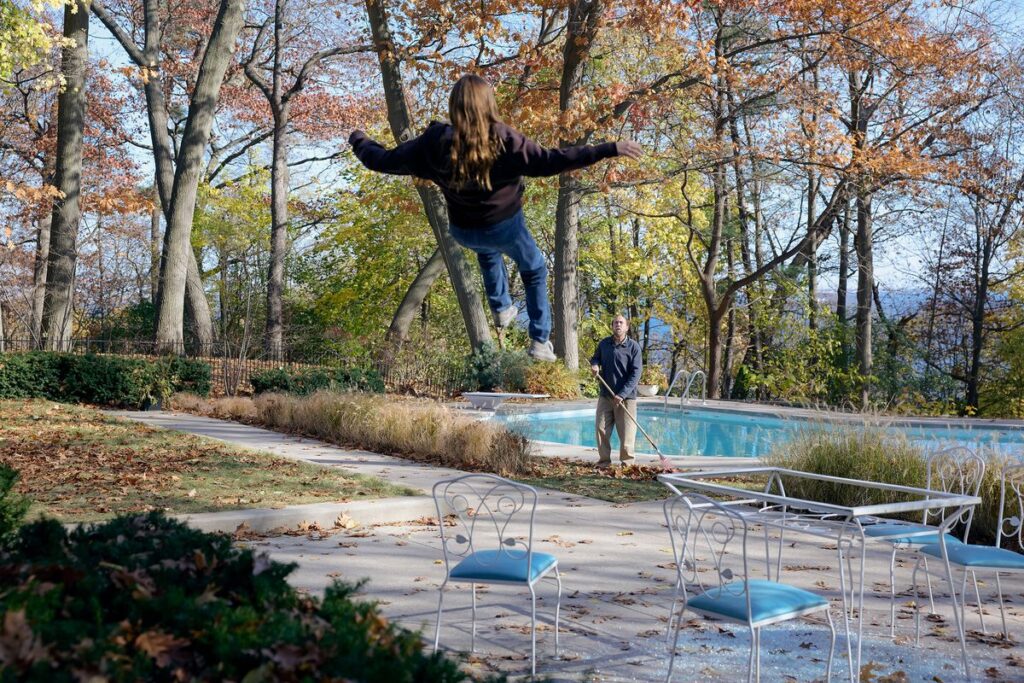
Featuring the most bizarre and mind-bending narrative of the year, Dream Scenario mixes elements of science fiction, absurdist comedy, social satire, and even a bit of psychological horror into an unforgettable experience that stayed in my thoughts well after the credits rolled. Touching on themes including the fickle nature of celebrity, the cynicism of advertising, the hive mind effect of social media, and more, it’s a movie that gives the audience a lot to think about while also never failing to entertain.
Nicholas Cage gives one of the best performances of his career as Paul Matthews, a sad sack college professor who doesn’t seem capable of commanding much attention or respect from anybody. Suddenly, everything changes when people start claiming that he’s been appearing in their dreams, including many who he’s never met. This bizarre and inexplicable phenomenon (the script wisely never offers a reason why it’s happening) thrusts Paul into the spotlight and turns him into a celebrity almost overnight.
Rather than acting cautiously or questioning the situation, Paul revels in the newfound attention, seeing it as a springboard to help him achieve his unfulfilled professional ambitions. Before long, his presence in others’ dreams evolves from a passive bystander into an active participant, with results that range from hilarious to deeply disturbing as Paul quickly learns that fame doesn’t come without consequences.
To say anything more would be revealing too much – this is an unpredictable film that holds many surprises in its clever, intricate script. Filmed in an unconventional, surrealist style that blurs the line between what’s real and what’s imagined, Dream Scenario repeatedly disorients the viewer all the way up to its bittersweet and moving conclusion – a final scene that suggests if there are no happy endings in real life, at least we can create one in our dreams.
2. Poor Things (Yorgos Lanthimos)
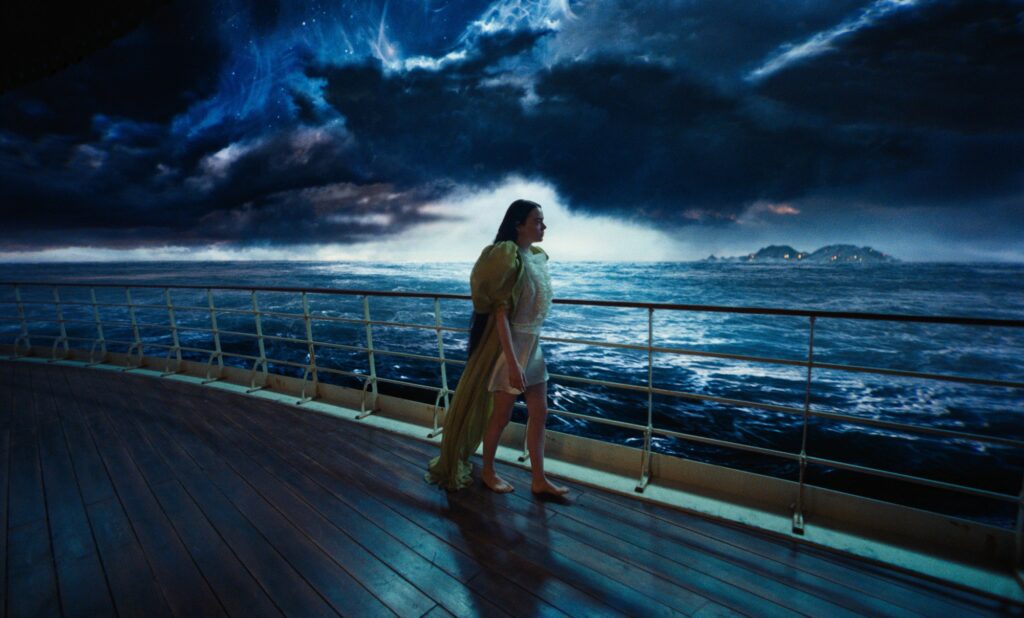
Yorgos Lanthimos is undoubtedly one of the most unique filmmakers working today, though I’ve had mixed reactions to his previous films. He finally won me over with Poor Things, a demented comedy and witty parable that’s unlike anything else I’ve seen. With its gorgeous cinematography that evolves from stark black-and-white to eye-popping color and its inventive set design that blends Victorian-era society with a sci-fi steampunk aesthetic, it’s the most visually striking movie of the year.
But for all the stunning craftsmanship on display, what really makes Poor Things a memorable experience is the delightful characters, impeccably brought to life by some phenomenal actors. Emma Stone gives the best performance of the year (and her career) as Bella Baxter, an adult woman with the brain of an infant child. It’s an incredibly challenging role that requires the star to fearlessly bare her body and lose all recognizable traces of herself, from her voice to her appearance to the way she moves, as Bella gradually learns about the world and her place in it.
Willem Dafoe is brilliant as Godwin, who Bella amusingly calls “God”, the mad but tender-hearted scientist who gave Bella life and desperately tries to protect her innocence. But when Bella becomes aware that there’s a whole world outside of the carefully maintained bubble she’s been kept in, she insists on seeing it for herself and embarks on an odyssey of self-discovery that opens her eyes to the joys of sexual pleasure and friendship, as well as more serious topics including the horrors of patriarchal society and the injustice of economic inequality.
Joining Bella on this journey is Duncan (Mark Ruffalo), a shallow and manipulative womanizer who only grows more loathsome and pathetic throughout the film as he realizes that the seemingly innocent and naïve Bella won’t be so easy for him to control. Ruffalo strikes comic gold in a role that seems way against type for him, completing a trifecta of award-worthy performances from this stacked ensemble. Offering a rare combination of rich characters, dreamy visuals, sharp social commentary, and gut-busting laughs, Poor Things is an enchanting fairytale that feels destined to become a classic.
1. Monster (Hirokazu Kore-Eda)

Who’s the monster? The newest film from acclaimed Japanese director Hirokazu Kore-Eda (Shoplifters) asks that question repeatedly over the course of its runtime without ever providing an answer – it’s up to the viewer to decide for themselves and your answer is likely to change several times. One could even argue that there isn’t a monster in this story at all, as the deceptively layered script shifts perspectives throughout, revisiting scenes through the eyes of different characters to give them new meaning until the whole truth is finally revealed.
The plot centers on Minato (Sōya Kurokawa), a young boy who has lost his father and seems to have emotional issues of some sort. His mother Saori (Sakura Andō) grows suspicious of her son’s strange behavior and when she finally confronts him, he reluctantly admits that he’s being abused by his teacher, Mr. Hori (Eita Nagayama). Saori complains to the school about her son’s abuse and is outraged when Mr. Hori suggests that Minato isn’t a victim at all, but has in fact been bullying another student, a social outcast named Yori (Hinata Hiiragi).
To say anything more would spoil the film, as the story keeps you questioning who’s telling the truth and what’s really going on until the very end. Perhaps the real monster is the audience, as we’re quick to judge the characters and form conclusions about what’s happening before we really know the motivation behind their actions. Wonderfully acted and backed by a gorgeous piano score from the legendary Ryuichi Sakamoto (his final film credit), Monster is a quietly devastating, deeply human film with a haunting conclusion that lingered in my thoughts for days.